
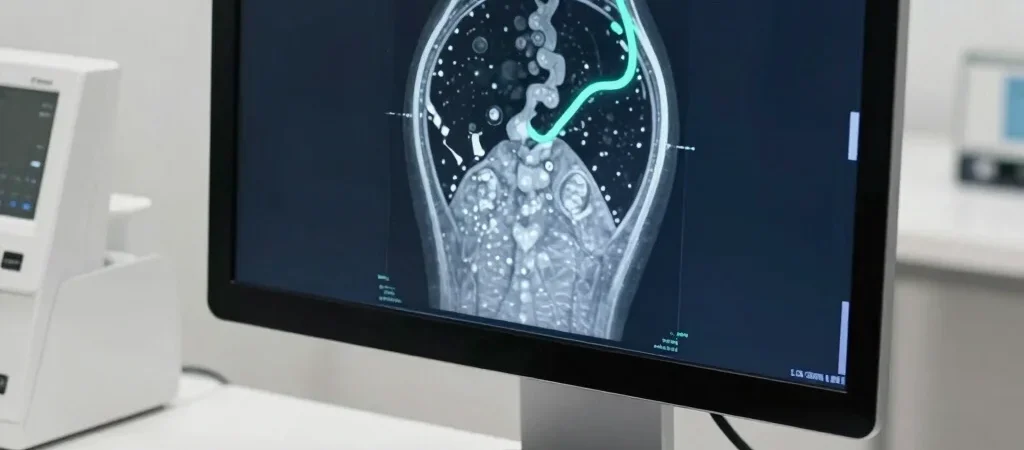
A radiology team introduces software that flags areas of an image for closer review. The screen may look straightforward, but the clinical question is larger than whether an algorithm can identify a pattern in a test set. Its value depends on how reliably it works in the intended setting and how it fits into decisions made by care teams.
Ask what it was tested on
Performance can depend on the images, equipment, patient groups, and clinical settings represented during development and evaluation. Results from one dataset do not guarantee the same performance in a different hospital or population. Independent evaluation in settings similar to intended use can help clarify how well a tool travels beyond the environment where it was built.
Measure the workflow too
A tool that marks a scan may change how clinicians prioritize cases, review images, or document findings. Evaluation should therefore consider practical effects such as additional review steps, missed alerts, and how often users need to override or verify an output. Accuracy alone does not describe whether the technology supports a useful and safe workflow.
Keep responsibility visible
AI can inform a clinical process without replacing professional judgment or the discussion around a patient’s situation. Teams need to understand what the system is designed to do, where its evidence is limited, and who is responsible for acting on its output. For readers assessing a health technology, the useful questions are specific: tested on whom, for which task, and under what conditions?